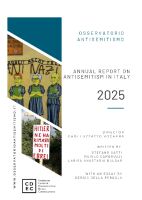

Rapporto Annuale Sull'antisemitismo In Italia 2025
Translated Title
Annual report on antisemitism in Italy 2025
Author(s)
Publication Date
Publication Place
Publisher
Abstract
Dal 1991 la Fondazione CDEC produce un rapporto annuale sull’antisemitismo in Italia. L’ultimo, che analizza i dati raccolti nel corso del 2025, evidenzia un quadro particolarmente allarmante: le manifestazioni di odio antiebraico in Italia continuano a crescere. Anche in termini qualitativi la situazione è nettamente peggiorata, poiché gli atti più gravi hanno conosciuto un aumento maggiore.
Nel corso dell’anno si sono registrati 963 episodi di antisemitismo, a fronte di 1492 segnalazioni ricevute. Questo dato rappresenta una crescita di circa il 10% rispetto allo scorso anno, del 100% rispetto al 2023 e di ben il 400% rispetto al 2022. Si tratta, dunque, di un trend in continua crescita.
Nel corso del 2025 la matrice principale delle manifestazioni di odio è stata legata a Israele. Antichi pregiudizi — come l’accusa del sangue, il mito dell’elezione e l’odio verso il genere umano — sono stati trasferiti sul sionismo e sullo Stato di Israele.
Sebbene le diffamazioni rappresentino la maggior parte degli episodi, seguite dalle minacce, gli incrementi maggiori rispetto allo scorso anno hanno riguardato le discriminazioni (+100%) e le aggressioni fisiche (+225%). In altri termini, gli atti più gravi sono cresciuti maggiormente.
Le manifestazioni di palese antisemitismo online rappresentano oltre il 66% dei casi. Particolarmente diffuso è l’uso di emoji o numeri apparentemente innocui (come il gufo, il polpo, 109, 14/88, le triple parentesi (((cognome))), il triangolo rosso) per veicolare messaggi d’odio nelle subculture digitali.
I mesi estivi, e in particolare giugno e luglio, hanno mostrato picchi particolarmente elevati. Anche le Olimpiadi di Milano-Cortina, all’inizio del 2026, hanno evidenziato vari episodi di antisemitismo. In termini geografici, gli episodi di antisemitismo fisico da noi osservati si sono concentrati in Lombardia e Lazio, seguiti da Toscana, Emilia-Romagna, Piemonte e Veneto.
Forse il dato più inquietante è che il 14% degli italiani concorda con l’ipotesi di espellere gli ebrei dall’Italia. Manifestare la propria identità (ad esempio parlare in ebraico o indossare la kippah) comporta oggi rischi particolarmente elevati di aggressione e marginalizzazione.
Il Rapporto si basa sulla definizione operativa di antisemitismo dell’International Holocaust Remembrance Alliance (IHRA), largamente in uso internazionalmente e analizzata nel contributo scientifico del prof. Sergio Della Pergola.
Nel corso dell’anno si sono registrati 963 episodi di antisemitismo, a fronte di 1492 segnalazioni ricevute. Questo dato rappresenta una crescita di circa il 10% rispetto allo scorso anno, del 100% rispetto al 2023 e di ben il 400% rispetto al 2022. Si tratta, dunque, di un trend in continua crescita.
Nel corso del 2025 la matrice principale delle manifestazioni di odio è stata legata a Israele. Antichi pregiudizi — come l’accusa del sangue, il mito dell’elezione e l’odio verso il genere umano — sono stati trasferiti sul sionismo e sullo Stato di Israele.
Sebbene le diffamazioni rappresentino la maggior parte degli episodi, seguite dalle minacce, gli incrementi maggiori rispetto allo scorso anno hanno riguardato le discriminazioni (+100%) e le aggressioni fisiche (+225%). In altri termini, gli atti più gravi sono cresciuti maggiormente.
Le manifestazioni di palese antisemitismo online rappresentano oltre il 66% dei casi. Particolarmente diffuso è l’uso di emoji o numeri apparentemente innocui (come il gufo, il polpo, 109, 14/88, le triple parentesi (((cognome))), il triangolo rosso) per veicolare messaggi d’odio nelle subculture digitali.
I mesi estivi, e in particolare giugno e luglio, hanno mostrato picchi particolarmente elevati. Anche le Olimpiadi di Milano-Cortina, all’inizio del 2026, hanno evidenziato vari episodi di antisemitismo. In termini geografici, gli episodi di antisemitismo fisico da noi osservati si sono concentrati in Lombardia e Lazio, seguiti da Toscana, Emilia-Romagna, Piemonte e Veneto.
Forse il dato più inquietante è che il 14% degli italiani concorda con l’ipotesi di espellere gli ebrei dall’Italia. Manifestare la propria identità (ad esempio parlare in ebraico o indossare la kippah) comporta oggi rischi particolarmente elevati di aggressione e marginalizzazione.
Il Rapporto si basa sulla definizione operativa di antisemitismo dell’International Holocaust Remembrance Alliance (IHRA), largamente in uso internazionalmente e analizzata nel contributo scientifico del prof. Sergio Della Pergola.
Translated Abstract
Since 1991, CDEC Foundation has been publishing an annual report on antisemitism in Italy. The latest report, which analyses data collected during 2025, paints a particularly alarming picture: manifestations of anti-Jewish hatred in Italy continue to rise. The situation has also deteriorated significantly in qualitative terms, as the most serious incidents have seen a greater increase.
Over the course of the year, 963 incidents of antisemitism were recorded, out of 1,492 reports received. This figure represents an increase of around 10% compared to last year, 100% compared to 2023, and a staggering 400% compared to 2022. It is, therefore, a steadily rising trend.
Throughout 2025, the primary source of hate speech was linked to Israel. Age-old prejudices — such as the blood libel, the myth of the chosen people and hatred of humanity — were projected onto Zionism and the State of Israel.
Although defamation accounted for the majority of incidents, followed by threats, the largest increases compared to last year were in discrimination (+100%) and physical assaults (+225%).
In other words, the most serious incidents have increased the most.
Manifestations of overt antisemitism online account for over 66% of cases. The use of seemingly innocuous emojis or numbers (such as the owl, the octopus, 109, 14/88, triple brackets (((surname))), and the red triangle) to convey messages of hate within digital subcultures is particularly widespread.
The summer months, and in particular June and July, saw particularly high peaks. The Milan-Cortina Olympics, in early 2026, also saw several incidents of antisemitism. Geographically speaking, the incidents of physical antisemitism we observed were concentrated in Lombardy and Lazio, followed by Tuscany, Emilia-Romagna, Piedmont and Veneto.
Perhaps the most disturbing finding is that 14% of Italians agree with the idea of expelling Jews from Italy. Expressing one’s identity (for example, speaking Hebrew or wearing a kippah) today carries a particularly high risk of aggression and marginalisation.
The report is based on the International Holocaust Remembrance Alliance’s (IHRA) working definition of antisemitism, which is widely used internationally and analysed in the academic paper by Prof. Sergio Della Pergola.
Over the course of the year, 963 incidents of antisemitism were recorded, out of 1,492 reports received. This figure represents an increase of around 10% compared to last year, 100% compared to 2023, and a staggering 400% compared to 2022. It is, therefore, a steadily rising trend.
Throughout 2025, the primary source of hate speech was linked to Israel. Age-old prejudices — such as the blood libel, the myth of the chosen people and hatred of humanity — were projected onto Zionism and the State of Israel.
Although defamation accounted for the majority of incidents, followed by threats, the largest increases compared to last year were in discrimination (+100%) and physical assaults (+225%).
In other words, the most serious incidents have increased the most.
Manifestations of overt antisemitism online account for over 66% of cases. The use of seemingly innocuous emojis or numbers (such as the owl, the octopus, 109, 14/88, triple brackets (((surname))), and the red triangle) to convey messages of hate within digital subcultures is particularly widespread.
The summer months, and in particular June and July, saw particularly high peaks. The Milan-Cortina Olympics, in early 2026, also saw several incidents of antisemitism. Geographically speaking, the incidents of physical antisemitism we observed were concentrated in Lombardy and Lazio, followed by Tuscany, Emilia-Romagna, Piedmont and Veneto.
Perhaps the most disturbing finding is that 14% of Italians agree with the idea of expelling Jews from Italy. Expressing one’s identity (for example, speaking Hebrew or wearing a kippah) today carries a particularly high risk of aggression and marginalisation.
The report is based on the International Holocaust Remembrance Alliance’s (IHRA) working definition of antisemitism, which is widely used internationally and analysed in the academic paper by Prof. Sergio Della Pergola.